Bystronic Logo
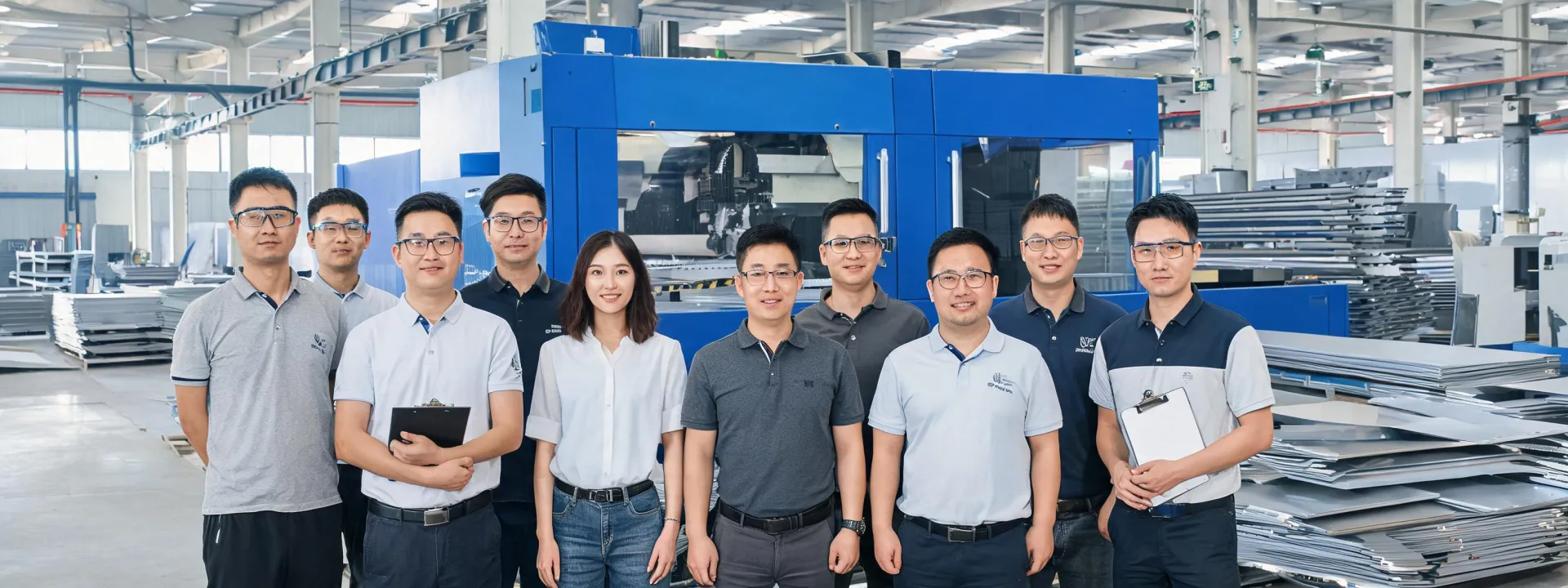
Laser engineering team on a modern production floor

Engineering continuity

Bystronic: A Company Story Told Through Process Control

Industrial credibility is not a collection of superlatives. It is the ability to preserve design intent from application study through commissioning, production release, maintenance, and the next program revision.

Evidence-first timeline

What a lifecycle record should retain

The supplied brand configuration contains no verified corporate milestone dates, so this timeline deliberately avoids invented history. It documents the operational sequence a purchaser can verify in project files.

01

Application definition

Drawings, alloy specifications, thickness distribution, sheet format, annual mix, quality limits, downstream operations, and staffing assumptions establish the design boundary. Missing inputs are marked open rather than converted into optimistic estimates.

02

Representative trial

Named material heats and controlled machine settings are used to cut a selected part family. Cycle logs, photographs, measurement results, gas conditions, consumable state, and program revision make the outcome traceable.

03

Production release

Utilities, safety interfaces, automation handshakes, operator tasks, preventive checks, backup practice, and escalation contacts are confirmed before the cell is treated as a production resource.

04

Controlled change

Material, firmware, optics, nozzle, nesting, gas, and maintenance changes are recorded against performance. That discipline helps distinguish gradual drift from a deliberate process revision.

Working principles

Three obligations in an engineering conversation

State the boundary

Maximum thickness, cut quality, throughput, automation hours, and consumable life have test conditions. A responsible statement names the material, setup, acceptance method, and exclusions.

Preserve the revision

Drawings, programs, machine settings, software, and inspection plans must be identifiable. A result without a revision trail is difficult to reproduce or diagnose.

Close with evidence

Commissioning and service work close on a safe machine state, an accepted part or defined exception, an updated record, and clear ownership of the next action.

Roles at the interface

Different questions need different owners

These role descriptions explain project accountability; they are not fabricated biographies or employee testimonials.

Laser applications engineer reviewing a cut sample

Applications engineering

Owns material trials, parameter context, acceptance criteria, and the technical handoff.

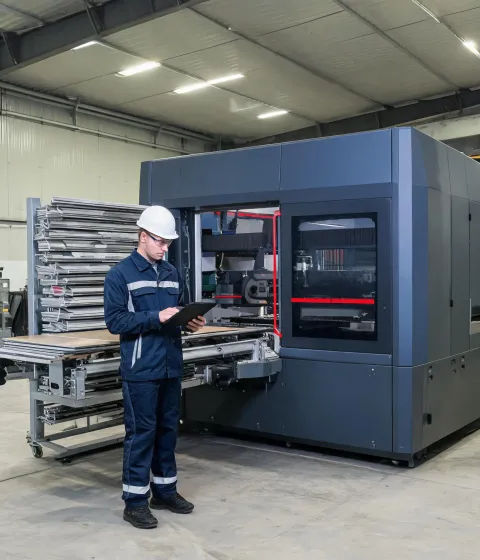
Automation engineer at laser material handling cell

Automation engineering

Owns handshakes, buffers, recovery states, access, and cell-level capacity assumptions.

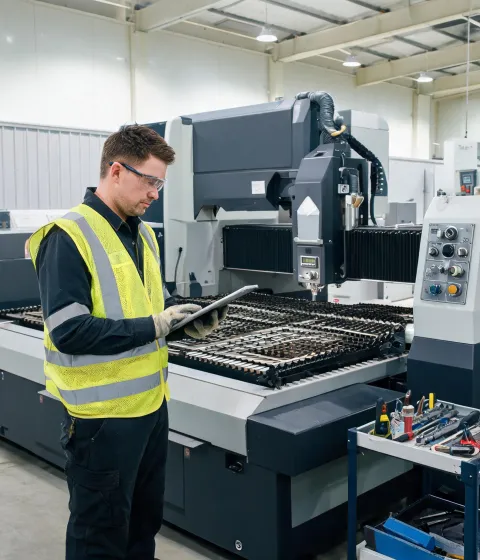
Laser field service technician with diagnostic tablet

Field service

Owns safe diagnosis, intervention records, replacement traceability, and closure checks.

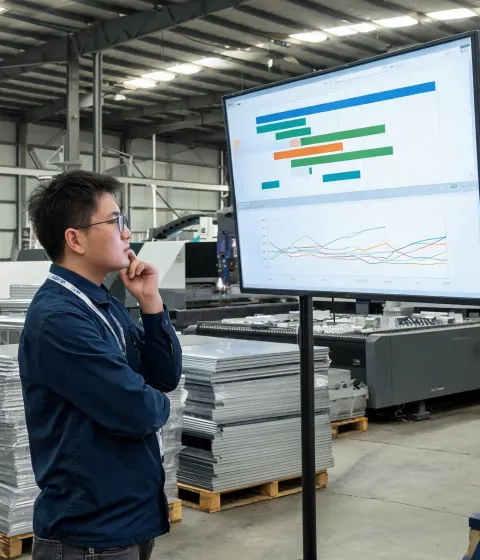
Production planner reviewing laser cell data

Production planning

Owns mix, takt, staffing, downstream balance, and the business measurement boundary.

Document review

Verify scope before relying on a mark

ISO 9001
request current certificate and scope
CE documentation
check model, options, and jurisdiction
Safety validation
confirm interfaces in final installation

Certification status can vary by entity, product, configuration, and market. Buyers should request current controlled documents rather than infer compliance from a logo or an unrelated model.

Trace the decision

Ask for the test record behind the recommendation.

Bring the drawing revision, material certificate, output target, and acceptance method to the first technical review.